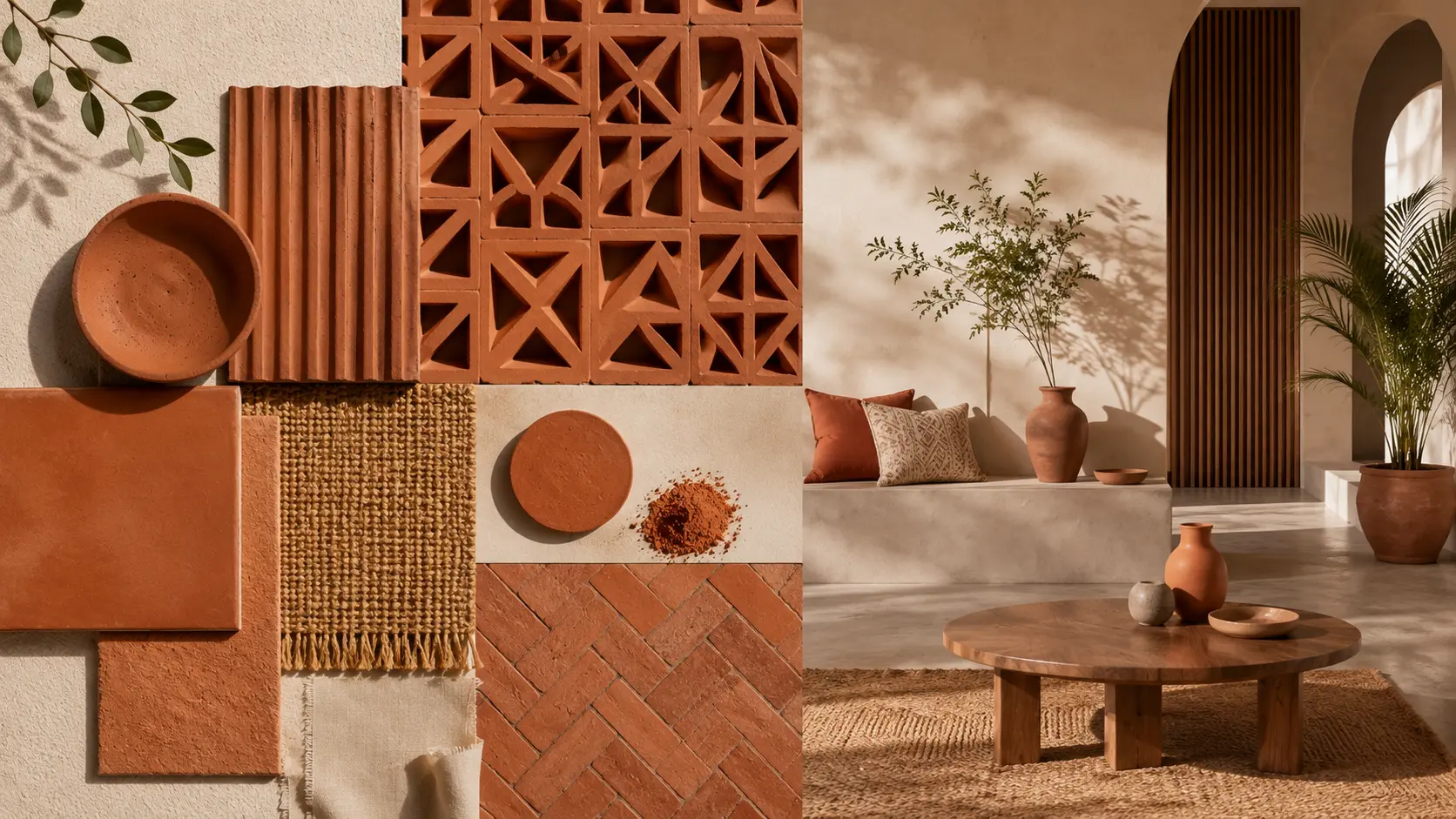
Terracotta has long been associated with traditional architecture, but today’s designers are redefining its role in contemporary interiors. Rather than using it as a dominant finish, architects and interior designers are incorporating terracotta with greater intention—introducing warmth, texture, and depth in ways that feel refined, understated, and distinctly modern.
Its versatility allows it to complement a wide range of design styles, from minimalist homes and boutique hotels to commercial spaces and luxury residences. Whether used sparingly or as a defining architectural element, terracotta brings a sense of permanence that few contemporary materials can replicate.
The Power of a Feature Wall
One of the most effective ways to introduce terracotta into an interior is through a feature wall. A single carefully positioned surface—behind a reception desk, bed, dining area, or staircase—can become the focal point of a room without overwhelming the overall design.
This restrained approach allows the material to speak for itself. Instead of covering every wall, terracotta creates a visual anchor that draws attention through its natural texture and earthy character. In spaces where the surrounding palette is intentionally quiet, its presence becomes even more striking.
Pairing Terracotta with Contemporary Materials
Terracotta works particularly well alongside the materials commonly found in modern architecture. Against polished concrete, it introduces warmth and softness. Combined with timber, natural stone, lime plaster, or matte black metal, it creates balanced compositions that feel both sophisticated and welcoming.
Its subtle tonal variation also prevents interiors from feeling overly uniform. While many manufactured finishes aim for perfect consistency, terracotta celebrates the richness of natural materials, adding depth and authenticity to contemporary spaces.
Lighting plays an equally important role. Because terracotta has a textured, matte surface, it responds beautifully to natural and artificial light. Soft wall washers, concealed lighting, or carefully positioned spotlights reveal shadows and variations that change throughout the day, giving the material a quiet sense of movement.
Designing Spaces That Feel Lived In
As modern interiors continue to embrace restrained palettes and clean architectural lines, materials with natural character become increasingly valuable. Terracotta introduces colour without feeling overpowering and texture without unnecessary complexity.
Its earthy tones bring warmth to minimalist spaces, helping them feel more inviting and lived in. Rather than appearing overly polished or staged, interiors finished with terracotta often carry a greater sense of individuality—creating environments that are as comfortable as they are visually compelling.
A Material That Shapes Atmosphere
The beauty of terracotta lies in its ability to transform a space without demanding attention. A single feature wall, a sculptural screen, or a carefully detailed architectural element can subtly change the mood of an interior, adding warmth, depth, and material authenticity.
That quiet confidence is why terracotta continues to find its place in contemporary design. It is not simply a finish, but a material that helps create interiors with lasting character—spaces that feel timeless, grounded, and genuinely connected to the people who inhabit them.
Frequently Asked Questions
Can terracotta be used in minimalist interiors?
Yes. Terracotta works exceptionally well in minimalist spaces, where its natural texture and warm tones provide contrast without disrupting a clean design language.
Where is terracotta most commonly used indoors?
It is frequently used for feature walls, decorative screens, wall cladding, ceilings, and bespoke architectural details in both residential and commercial interiors.
Does terracotta work with modern materials?
Absolutely. Terracotta pairs naturally with concrete, timber, stone, lime plaster, glass, and metal, making it highly adaptable to contemporary interior design.