How Is Terracotta Made?
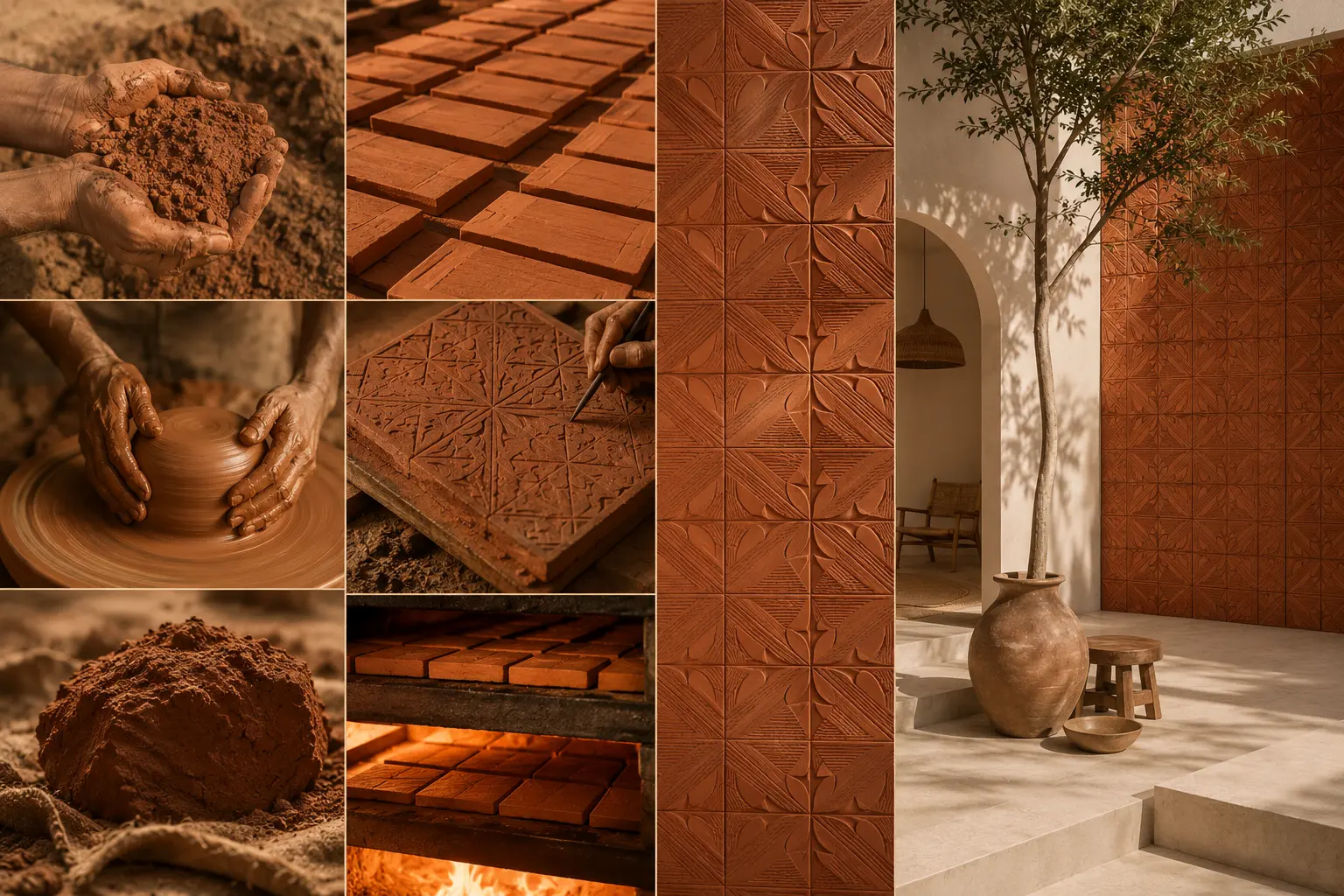
Every piece of terracotta begins with something remarkably ordinary—natural clay. Soft, malleable, and shaped by the earth itself, it gives little indication of the strength it will eventually possess. Yet through a carefully controlled manufacturing process, this humble material is transformed into one of architecture’s most enduring building materials.
The process begins with the selection and refinement of high-quality natural clay. Once impurities are removed, the clay is shaped into its intended form, whether that be architectural panels, wall cladding, tiles, or decorative elements. At this stage, the material is still delicate. Too much moisture, uneven drying, or excessive handling can cause distortion or cracking, making precision essential from the very beginning.
Before firing, the shaped clay is dried gradually to remove excess moisture. This controlled drying stage helps maintain dimensional stability and prepares the material for the intense heat of the kiln.
The true transformation takes place during firing. Inside the kiln, the clay is exposed to temperatures high enough to permanently alter its internal structure. As minerals react to the heat, the material hardens, becomes significantly stronger, and develops the warm earthy tones that make terracotta instantly recognisable. What began as soft clay is now a durable ceramic material capable of withstanding decades of exposure in both interior and exterior environments.
Modern manufacturing has refined this centuries-old process without changing its essence. Advanced production techniques ensure greater consistency in size, strength, and finish, allowing terracotta to meet the performance standards required for contemporary architecture while preserving the natural character that designers value.
What Makes Terracotta Different?
Terracotta is often grouped with ceramic and porcelain, but each material behaves differently after firing.
Porcelain is fired to create a highly dense, vitrified surface with very low water absorption, making it ideal where uniformity and precision are priorities. Terracotta, by contrast, retains a more natural, textured body. Its subtle variations in colour and surface create depth and warmth, giving buildings a softer and more tactile appearance.
Its natural porosity is another defining characteristic. While certain applications may require sealing, this breathable structure contributes to the material’s unique character and has long made terracotta well suited to warm climates. Combined with thoughtful architectural design, it can support more comfortable interior environments by helping manage heat and moisture.
A Process That Connects Tradition with Modern Design
Although manufacturing technology has evolved considerably, the fundamental process of making terracotta has remained unchanged for centuries. It is still a material shaped from the earth, strengthened by fire, and valued for its authenticity.
That enduring connection to nature is one of the reasons terracotta continues to appeal to architects and designers. In an industry increasingly defined by engineered materials, terracotta offers something different—a material with history, character, and a manufacturing process that celebrates transformation rather than concealing it.
Frequently Asked Questions
Does modern terracotta differ from traditional terracotta?
Yes. While the manufacturing principles remain the same, modern production techniques provide greater precision, consistency, and structural performance for architectural applications.
Why does terracotta have different shades of colour?
The natural composition of the clay and the firing process influence its final colour, resulting in the warm earthy tones and subtle variations that are characteristic of terracotta.
Is fired terracotta durable?
Yes. Once fired, terracotta becomes a strong and long-lasting ceramic material that has been used in architecture for centuries.